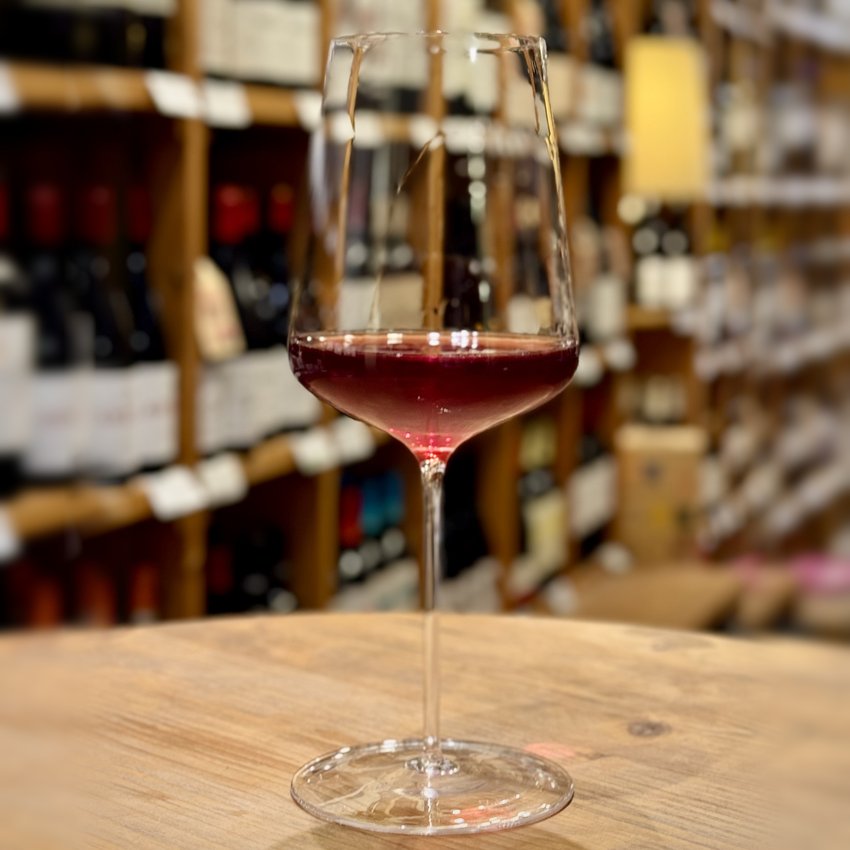
An evening of wine, friendship, and surprises
Last Monday, June 8th, we met again for another blind wine tasting with wine-loving friends and industry professionals. It was one of those evenings that reminds us why we’re so passionate about this world: sharing bottles, exchanging opinions, and discovering wines without the influence of labels.
The activity was as simple as it was exciting. Each of the seven participants arrived with a completely sealed bottle, with no clues as to its origin, variety, or producer. The rest of the group had to taste, analyze, and try to identify what was hidden behind each glass.
Blind tastings have something special about them. They force us to listen to the wine without prejudice, to focus solely on its aromas, its texture, and its sensations. And, as is often the case, the surprises soon followed.
The wines of the night
The selection process took us through some of the most interesting wine regions in Europe:
- La Tercera Viña 2024 (Xarel·lo, DO Penedès)
- 200 Monges 2011 (Viura and Malvasía, DOCa Rioja)
- La Cabane Ploussard (André-Jean and Héléana Morin, Jura)
- Poulprix 2024 (Anne and Jean-François Ganevat, Jura)
- L’Exclosa 2017 (Syrah, DOQ Priorat)
- Feedback 2012 (Cabernet Sauvignon and Trepat, DO Conca de Barberà)
- Overture 2023 (Sparkling wine from Modena, Italy)
A lineup as diverse as it was challenging, where young wines and wines with long aging coexisted, traditional preparations and more alternative proposals.
The main attraction: Ganevat’s Poulprix 2024
If there was one wine that achieved a virtually unanimous consensus among the participants, it was the Poulprix 2024 from Anne and Jean-François Ganevat .
Even during the tasting, its personality and balance stood out, but once the bottle was opened, its quality improved even further. It’s no secret that acquiring Ganevat wines is not usually easy and that each of their creations generates enormous anticipation among enthusiasts.
It was one of those wines that demonstrate why the Jura has become one of the most fascinating regions in the current wine scene.
The surprise of the night: an energetic Ploussard
Another wine that generated a lot of comments was La Cabane Ploussard .
Many of the attendees were surprised by its spicy profile and by that subtle and playful carbonation that appeared on the tip of the tongue, bringing freshness and dynamism to each sip.
It was one of those wines that makes you want to keep drinking and reminds you why the traditional varieties of Jura continue to win over so many fans around the world.
When experience makes the difference
One of the highlights of the night came with the 200 Monges 2011 .
One of the participants was able to identify the style of the wine almost one hundred percent, recognizing with great precision the characteristics of the Viura variety and the influence of long aging.
A demonstration of how experience and sensory training can help detect details that often go unnoticed by most tasters.
The wines that made us doubt
As is the case in any good blind tasting, some wines were particularly difficult to interpret.
The Xarel·lo from Penedès showed a personality that took us down different paths and that few were able to clearly associate with the variety.
The 2012 Feedback , made with Cabernet Sauvignon and Trepat, also managed to surprise many at the table. Its varietal combination and its evolution in the bottle generated numerous hypotheses before its true identity was revealed.
And to close the night, a bottle appeared that we could define as a true wine for initiates: the Overture 2023 , a sparkling wine from Modena with a very particular personality that sparked diverse opinions and further enriched the final debate.
The best part of a blind tasting
Beyond correctly identifying varieties, regions, or producers, the true richness of these tastings lies in the conversation that arises around each bottle.
Discovering how people with different experiences perceive the same wine, comparing opinions, and being surprised by styles we might not usually choose is one of the best ways to continue learning and enjoying wine.
And once again, this tasting reminded us of a great truth: when the labels disappear, the biggest surprises often appear.